

Postdoctoral research opportunities with GLAM
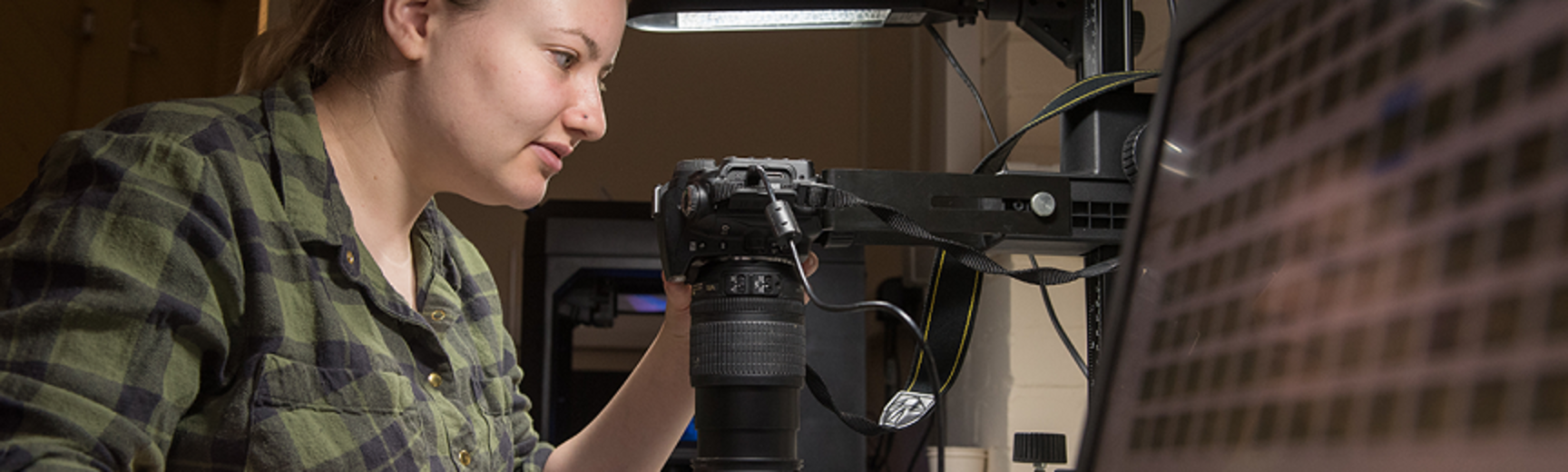
Research undertaken at Oxford University’s Gardens, Libraries and Museums (GLAM) is highly diverse, ranging from anthropology to zoology via classics, palaeontology, history, archaeology, plant sciences and more.
We welcome approaches from postdoctoral researchers carrying out collections-based research in relevant areas who are interested in holding externally funded fellowships in our world-class institutions.
We are happy to provide advice and support to applicants for independent research fellowships, including but not limited to:
- AHRC Catalyst Awards
- AHRC Curiosity Awards
- BBSRC Fellowship Scheme
- British Academy Postdoctoral Fellowships
- EC Horizon Europe Marie Skłodowska-Curie Actions Postdoctoral Fellowships
- ERC Starting Grant
- Leverhulme Trust Early Career Fellowships – see Applications for Leverhulme Trust Early Career Fellowships below
- NERC Independent Research Fellowships
- Royal Commission for the Exhibition of 1851 Research Fellowships
- Royal Society Dorothy Hodgkin Fellowship
- Royal Society Newton International Fellowships
- Royal Society University Research Fellowships
- UKRI Daphne Jackson fellowships
If you are interested in applying for funding for a fellowship, please contact the GLAM f Research & Impact team (research@glam.ox.ac.uk), who will connect you with the relevant departmental research lead.
For applications for all funding schemes apart from the Leverhulme Trust Early Career Fellowships – for which GLAM has a separate internal process – a summary research proposal and academic or narrative CV should be provided at least four months in advance of the scheme submission deadline.
Please note that funders may require Oxford University to carry out an internal application process for some schemes.
Department-specific information and guidance about postdoctoral opportunities
Applications for Leverhulme Trust Early Career Fellowships
If you want to apply for a Leverhulme Trust Early Career Fellowship with an Oxford University GLAM department, you must read the FAQs below.
Potential candidates should contact the departmental Head of Research prior to application to request departmental support and in order to locate a suitable mentor. Selected departmental candidates will submit a draft proposal to the GLAM Research Committee. The committee will choose two submissions for match-funding from the John Fell Fund. Only these two candidates can then prepare their application for the Leverhulme, due by the annual February deadline.
If you have any questions about the application process or the funding scheme, contact the GLAM Research & Impact team at researchsupport@glam.ox.ac.uk.
Download the application form [to be added]
Leverhulme Trust Early Career Fellowships FAQs
The Leverhulme Trust is offering about 145 Fellowships in 2026. These Fellowships are for researchers who work at UK universities that can award research degrees.
They are aimed at researchers who are still at an early stage in their careers but already have a strong research record. The Fellowship is meant to support career development and, ideally, help the researcher move into a permanent academic job, either at the same university or another one.
During the Fellowship, researchers are expected to carry out an important research project and produce work that can be published. The project must be new — it should not simply repeat or slightly expand their PhD research.
Applicants should make sure that their proposed project is realistic and can be completed within the time of the Fellowship.
Applying for a Leverhulme Trust Early Career Fellowship with a GLAM department happens in two stages.
First, there is an internal selection process, sometimes called a “sift”. During this stage, the GLAM Research Committee chooses two candidates to go forward.
Second, the two selected candidates work with a mentor to complete and submit their full application to the Leverhulme Trust.
A detailed timeline is set out below.
The application timeline is outlined below. Please note: all dates refer to the year before the intended submission year (for example, July 2026 for a February 2027 submission).
- By 30 June:
Potential applicants should email the GLAM department’s Head of Research. They will help you find a suitable mentor within the department.
Your email should include:- The title of your proposed research project
- A short summary of the proposed research
- A two‑page academic CV or narrative CV which includes a list of publications (published, submitted, in preparation). You may wish to use the UKRI Résumé for Research and Innovation (R4RI) as a template for a narrative CV.
- 31 July:
After a decision by the Head of Research, mentors will tell applicants whether they have been selected as one of the two departmental candidates to go forward to the GLAM Research Committee in Michaelmas Term. - August-September:
Selected candidates work with their mentor to prepare an internal application form. - 16 September:
Candidates chosen by the department submit their internal application form by email to their mentor.
This form is reviewed by the GLAM Research Committee in early autumn (usually early October).
The form asks for:- The title of your research project
- A one‑page (maximum) summary of the proposed research
- Why you have chosen this department and university
- How your project meets one or more of the Leverhulme Trust’s assessment criteria
- October:
The GLAM Research Committee selects two applications (and one reserve) to receive match‑funding support from Oxford University’s John Fell Fund. - By 30 October:
Applicants are told whether they have been selected to apply to the Leverhulme Trust. Feedback from the GLAM Research Committee is also provided. - November-January:
The two selected candidates continue developing their full Leverhulme Trust applications, including the budget. They receive support from their mentor and GLAM’s Research and Impact team. - January (the following year):
Applications must be finished and uploaded to the Leverhulme Trust’s online system at least three weeks before the funder’s deadline. This allows time for institutional approval. - February (the following year):
This is the Leverhulme Trust’s submission deadline. Applicants should check the Early Career Fellowship webpage to confirm the exact date. Oxford University’s Research Services submit the application to the Leverhulme Trust after completing internal checks and approvals.
The GLAM department’s Head of Research will help you find a suitable mentor. Your mentor will support you during both the internal selection stage and, if you are selected, the full application to the Leverhulme Trust.
You may find it helpful to explore the ORA GLAM Staff Research Collection and to look at the research profiles of GLAM researchers when identifying potential mentors.
|
Department |
Head of Research (as of April 2026) |
Contact email |
|
Ashmolean Museum |
Mallica Kumbera Landrus |
|
|
Bodleian Libraries |
Chris Fletcher |
|
|
History of Science Museum |
JC Niala |
|
|
Oxford Botanic Garden & Arboretum |
Chris Thorogood |
|
|
Oxford University Museum of Natural History |
Ross Anderson |
|
|
Pitt Rivers Museum |
Ashley Coutu |
The GLAM Research and Impact Team will support your application following selection by the GLAM Research Committee.
The Panel will assess the applications according to the Leverhulme Trust’s four primary criteria:
- Originality: the research achieves more than the incremental development of a single discipline
- Importance: the work will enable further research or enquiry
- Significance: the proposed research has relevance outside a single field, and is able to excite those working in other disciplines
- Merit: the quality of the research design and methodology, and the suitability of the researchers and institution for the realisation of the proposed research objectives
As secondary criteria, the Trust particularly welcomes applications that:
- reflect an individual’s personal vision, aspiration, or intellectual curiosity
- take appropriate risks in setting and pursuing research objectives
- enable a refreshing departure from established patterns of working – either for the individual, or for the discipline
- transcend disciplinary boundaries
Panel members read all the research proposals and CVs and give each application an initial score. The score ranges from Outstanding to Weak, using the following scale:
- Outstanding: A+ (9 points), A (8), A- (7) – the proposal clearly meets all of the Trust’s primary criteria
- Good: B+ (6), B (5), B- (4) – the proposal meets two or three of the Trust’s primary criteria but it is less clear how/whether the other criteria are met
- Satisfactory: C+ (3), C (2), C- (1) – the proposal strongly meets one of the Trust’s primary criteria but it is less clear how/whether the other criteria are met
- Weak: U (0) – it is unclear how the proposal meets the Trust’s primary or secondary criteria
Panel members base their scores on the assessment criteria listed above and on whether the applicant’s publications are of good quality and quantity, as appropriate to their field.
At the GLAM Research Committee (GRC) meeting, one panel member – usually the Head of Research – briefly introduces each project. The committee then discusses the proposal and each member gives it a score. All scores are recorded in a spreadsheet, and proposals are ranked using their average score.
The committee selects the top two proposals as the main choices. The proposal ranked third is kept as a reserve, in case one of the top two candidates withdraws.
The committee includes:
- The Chair and Deputy Chair
- The six departmental Heads of Research
- The GLAM Research & Impact support team
- The GLAM Registrar
- GLAM’s representative on the Research Staff Consultation Group
No. The fellowship requires joint funding. The Leverhulme Trust pays part of the Fellow’s total salary costs (including National Insurance, pension contributions, and London allowance where relevant). The host university must pay the rest.
GLAM receives match funding from Oxford University’s John Fell Fund for two Leverhulme Trust Early Career Fellowships each year. Each applicant can submit only one application per year to the Trust.
It is your responsibility to check that you meet the eligibility requirements. You should carefully read the eligibility criteria, application guidance, and deadlines for the scheme.
The full eligibility rules are available on the Leverhulme Trust’s Early Career Fellowships webpage.
Yes. If you still meet the eligibility criteria and the department is willing to support you again, you may apply again the following year using the same timeline. Future deadlines are available on the Leverhulme Trust scheme website and GLAM’s internal deadline will remain the same each year.
Yes. If you need any reasonable adjustments or disability‑related support, contact the departmental Head of Research as early as possible to discuss your needs. See the section “Who will support my application?” above.
You can also contact the contact the Staff Disability Advisor for additional support.
If you have any questions about the application process or the funding scheme, contact the GLAM Research & Impact team at researchsupport@glam.ox.ac.uk.

